© 2026 Rentokil North America © RK Environmental Services – All Rights Reserved.
March is the flashpoint for retailers operating across multiple locations, where the surge in seasonal pests coincides with heightened audit scrutiny. Warmer weather initiates a spike in activity as rodents seek new harborage sites, stored-product insects emerge from overwintering, and early-season flies are drawn to loading docks and waste areas. For operations managing dozens or hundreds of stores, this shift can expose compliance variance between your strongest and weakest sites — gaps that auditors are certain to spot.
The challenge is whether your pest management and sanitation controls are aligned across every location to withstand that risk without a compliance failure. For food retailers operating under third-party audit schemes or preparing for regulatory inspections in Q2, March is the ideal window to identify network-wide gaps and close them before they become findings.
Standardizing Pest & Sanitation Controls Across Every Location
For multi-site food retailers, the pest management program is only as strong as its least consistent location. Standardization across a network isn't about imposing rigid conformity. It's about ensuring every store operates within the same framework of documentation, accountability, and oversight, so that when conditions change, the program holds. That framework is what separates retailers who manage spring transitions from those who are managed by them.
Why March Accelerates Risk Across a Retail Portfolio
Geographic spread creates uneven pest risk across a retail operation. A retailer with locations spanning the Northeast and Southeast will see pest activity escalate at different rates, with southern sites experiencing earlier fly and cockroach activity while northern locations contend with rodent intrusion as exterior conditions shift. March sits at the center of this divergence.
What makes this operationally dangerous is that most multi-site food retail pest control programs were built for consistent conditions. Service frequencies, monitoring device placements, and recordkeeping protocols may function adequately during winter months when pest risk is low and uniform. But as March introduces variability, the program's weakest points surface. A location with incomplete service records, delayed corrective actions, or outdated site maps won't fail because of a single pest sighting; it will fail because the audit trail doesn't demonstrate control.
For retailers subject to third-party audits under SQF, BRCGS, or similar schemes, this matters enormously. Auditors don't just evaluate whether pests are present. They evaluate whether the management system behind your pest control program is functioning, and whether it functions the same way at every location in your operation.
The Consistency Problem
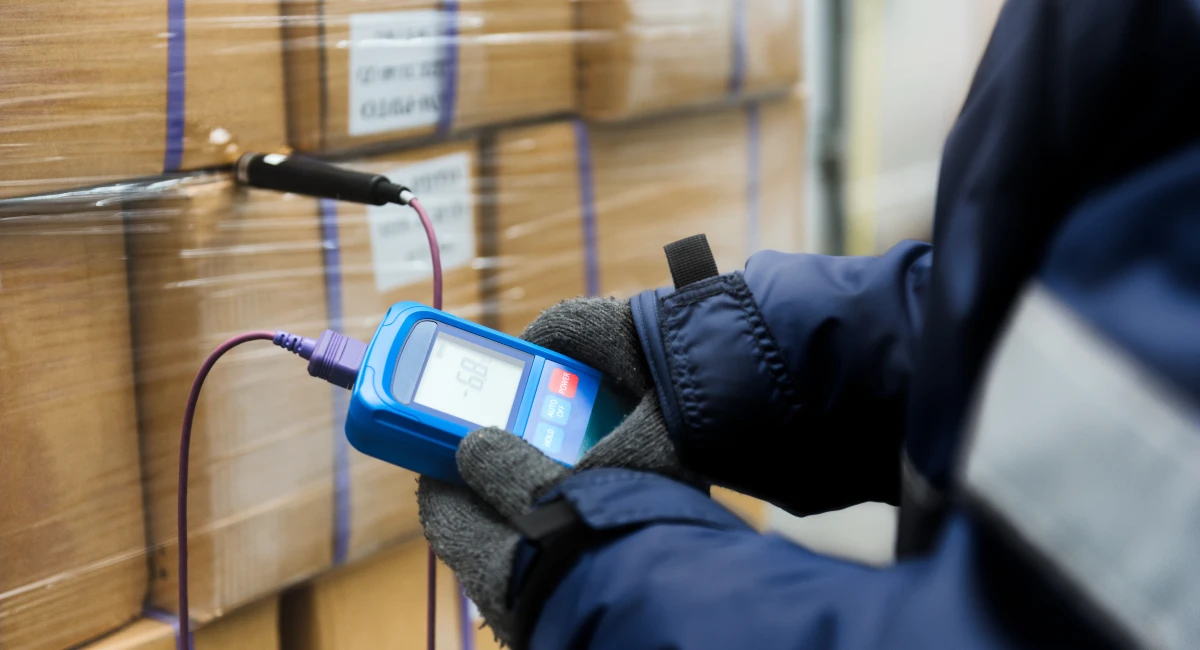
Multi-site food retailers frequently operate with a patchwork of pest management practices. Regional managers may use different log formats, and resolution timelines may vary by location. Trend data, if it's captured at all, may sit in disconnected spreadsheets rather than a centralized platform. None of this is unusual, but all of it becomes a liability when seasonal pest activity increases, and auditor expectations sharpen.
The most common gaps RK Environmental identifies across retail operations in early spring include:
- Inconsistent documentation formats — service reports, device maps, and corrective action logs that differ between regions or even between stores within the same district, making enterprise-wide review nearly impossible.
- Delayed corrective actions — findings from routine service visits that remain open for weeks rather than being resolved within a defined timeframe, creating a paper trail that signals reactive rather than proactive management.
- No automated trend monitoring — pest activity data that is recorded but never analyzed for spikes or patterns, meaning emerging issues at individual sites go unnoticed until they escalate.
These aren't dramatic failures. They're the kind of discrepancies that accumulate across an operation and become visible the moment an auditor walks through a single underperforming location.
Portfolio Risk Snapshot: A Self-Check
Before the March pest risk peaks, compliance leaders across multi-location retailers should be able to answer three questions with confidence:
- Are all sites using the same log format? If your recordkeeping isn't standardized, your ability to compare performance across locations is compromised. An auditor reviewing records from multiple sites expects consistency. Discrepancies in format raise questions about uniformity in practice.
- Are corrective actions closed within 48 hours? A defined resolution timeline is a baseline expectation in most audit schemes. If your average closure time varies significantly between locations, or if you can't report on it at all, that's a systemic gap rather than a site-level issue.
- Are trend spikes flagged automatically? Manual review of pest activity data across dozens of locations is neither reliable nor scalable. Retailers investing in remote monitoring and sensing technology can detect activity spikes in real time, before they become audit findings or, worse, customer-facing incidents.
If the answer to any of these is uncertain, March is the time to act. The window between seasonal pest escalation and Q2 audit cycles is narrow, and closing systemic gaps takes longer than closing individual findings.

One Store Can Sink the Score
Consider a regional food retailer with 40 locations. While 39 sites maintain rigorous standards, a single high-volume store with recent management turnover falls behind. When March temperatures drive a spike in rodent activity at the loading dock, the site’s lack of trained oversight causes the corrective action to stall.
By the time a third-party auditor arrives in April, the unresolved finding has been open for weeks. The auditor doesn’t just flag the pest activity; they flag a systemic failure in the retailer’s management system. Because audit schemes evaluate the integrity of the entire operation, a critical finding at this one location creates an enterprise-wide compliance exposure. This single-site gap effectively sinks the score for the brand, proving that without a structured audit-readiness program, one underperforming store becomes the entire network’s liability.
Building the Standardization Playbook
Closing the alignment gap across a multi-site retail operation isn't a one-week project, but March is the right time to begin. The most effective approach focuses on three areas:
- Unified documentation standards. Every location should use the same service report format, the same corrective action log structure, and the same device mapping conventions. This isn't about bureaucracy. It's about creating an operation that can be reviewed, compared, and defended as a single program rather than a collection of individual sites.
- Defined corrective action timelines. Establish a clear, non-negotiable window for closing findings: 48 hours for critical issues and five business days for non-critical items. Build escalation triggers so that any finding approaching its deadline without resolution is automatically elevated to regional or national oversight. Track closure rates centrally and flag locations that consistently fall outside the standard.
- Centralized trend analysis. Pest activity data should be consolidated into a single platform to enable early identification of regional and national trends. When a cluster of stores in a specific geography shows rising fly counts or rodent activity in March, that insight should trigger a proactive response rather than waiting for individual site managers to escalate the issue.
For retailers managing complex networks across multiple states, partnering with a pest management provider that understands food retail compliance at scale is essential. The difference between a program that survives March and one that thrives through it comes down to whether standardization is built into the foundation or bolted on after a finding.
Make a Start with RK Environmental
March doesn't wait for readiness plans to be finalized. If your network hasn't undergone an alignment review heading into spring, now is the time to assess where your recordkeeping, corrective action processes, and monitoring capabilities stand. A structured review of your current program against the standards your auditors expect can identify the gaps that matter most and prioritize the fixes that protect your entire operation, not just individual stores.
Managing different pest problems at every store makes you double up your work. Stop chasing your tail and get every location on the same plan before the spring surge. A March review finds the gaps in your records so you can pass every audit.
Book Your Free Pest Inspection Today
Our local technicians will assess your property and recommend tailored solutions. Fast, friendly, and completely obligation-free.
- Safe, targeted treatments
- Local experts, fast response
- Trusted, trained technicians