© 2026 Rentokil North America © RK Environmental Services – All Rights Reserved.
Quick Facts About Soldier Beetles
- Soldier beetles are generally harmless outdoors but can become a nuisance when they enter commercial or food-handling facilities
- They are often attracted to buildings from nearby landscaping, especially areas with mulch, flowers, or vegetation
- Building or site entry typically occurs through gaps, vents, doors, or other small openings in the building structure
- Even small indoor sightings can raise contamination concerns in regulated environments like food processing sites
- Effective control focuses on identifying entry points, applying targeted treatments, and improving exclusion and landscaping practices
Soldier beetles are mostly harmless outside. However, they can cause contamination risks and compliance issues when they show up indoors in commercial facilities. We want you to be best equipped to spot the signs of a soldier beetle infestation. So read on to check out how RK Environmental tackled a Soldier Beetle in a USDA-inspected facility. We also share practical tips to control soldier beetles and prevent their return.
Case Study: Soldier Beetle Infestation in a USDA-Inspected Facility
RK Environmental Services got an urgent call from a USDA-inspected client. A Food Safety Inspection Service inspector found new insect activity. While in the employee break area, the inspector noticed a red-headed insect on his pants. Although the sighting occurred outside the production zone, it was treated as a serious issue requiring immediate action.
The First Sign: A "Red-Headed" Insect Sighting
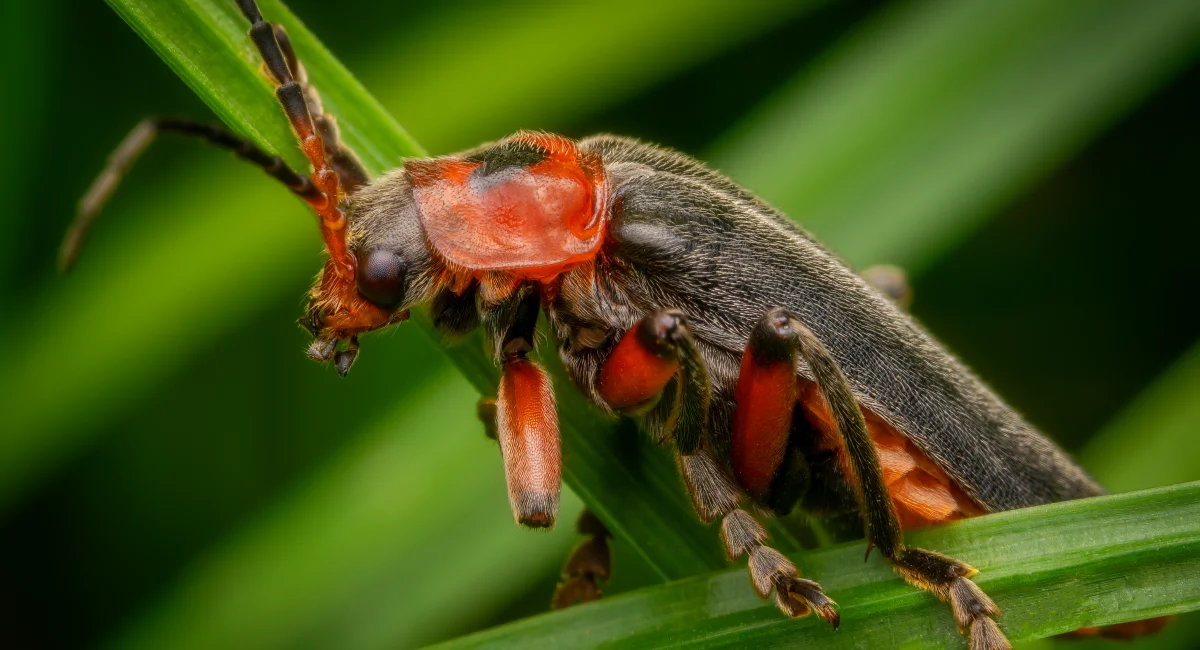
An RK specialist came the same day. They collected specimens and identified them as soldier beetles (Cantharidae). These soft-bodied, elongated beetles are common outdoors worldwide and are sometimes called "leather wings" because of their cloth-like wing covers. They vary in color from yellow to red with brown or black markings and resemble lightning bugs, but lack light-producing organs.
The inspection revealed all sightings were in the break room and adjacent areas. A closer look at the property and surroundings uncovered likely causes. Across the street, another business had significant tree coverage and had recently installed fresh mulch, which can attract soldier beetles. At the client's facility, three possible entry points were found: an unscreened break room radiator vent, crevices in the exterior wall, and an unscreened rooftop vent.
RK found that the beetles came from nearby landscaping. An appropriate insecticide was applied to the interior and exterior of the building, and the client was advised to screen vents and seal crevices to block entry.
With the infestation being solved promptly, RK and our client took away key lessons on prevention and extermination:
- Correct identification of a pest is crucial to using correct and effective treatment
- Interviewing staff can reveal a history of pests and potential causes, such as seasonal recurrences
- Responding quickly is critical, especially when regulatory inspectors are involved
What Are Soldier Beetles? Identification & Behavior
Soldier beetles are soft-bodied insects, usually yellow, orange, or red with black markings. Their long bodies and flexible wings give them a unique look compared to other beetles. Soldier Beetles are usually found in fields or gardens during summer and early fall, which is the optimal place and time for them to feed on nectar, pollen, and other insects.
During their early life stages as larvae, they feed on small insects and insect eggs. These beetles are not known to destroy structures or products, but they are a nuisance and not a good look when they enter buildings en masse.
In commercial environments, even harmless insects can present problems if they contaminate surfaces, products, or packaging.
How Soldier Beetles Entered the Facility
In this case, the beetles were most active near exterior doors and windows. The facility recently finished landscaping. They added mulch and flowering plants around the edge.
This created an ideal environment for soldier beetles to gather, mate, and lay eggs. The proximity of this habitat to the building increased the likelihood of insects wandering inside.

Entry Points Identified by the RK Team
During the inspection, the RK Environmental team identified gaps around loading dock doors, unsealed conduit penetrations, and areas where weather stripping was worn or missing. These openings provided easy access for insects seeking shelter or attracted by lights inside the building.
Possible Source: Nearby Landscaping & Mulch
The landscaped areas were determined to be a significant contributing factor. Fresh mulch can attract many insects, like soldier beetles. Nearby flowering plants provide a quick food source for the adults. When conditions outside changed, such as cooler evening temperatures or heavy rain, the beetles likely moved toward the warmth and shelter of the facility.

How RK Environmental Got Rid of the Soldier Beetles
Once the soldier beetle problem was confirmed, the focus shifted to developing a plan addressing the immediate infestation and the underlying conditions that allowed the insects inside. Since this incident occurred in a USDA-inspected facility, time was critical. The visible insect activity raised concerns for the inspector and pressured the facility's management to act quickly and effectively. RK Environmental responded with a combination of treatment, exclusion, and preventive measures designed to deliver fast results while protecting long-term compliance.
Insecticide Treatment & Exclusion Measures
The control plan began with using an approved insecticide. It targeted entry points and the outside walls. This helped reduce the number of beetles attempting to enter the building. Inside, vacuuming was used to physically remove visible beetles from sensitive areas, preventing potential contact with products or equipment.
Exclusion played a critical role in long-term soldier beetle control. Damaged weather stripping was replaced, gaps in walls and around doors were sealed, and light fixtures near entrances were adjusted to reduce attraction. The goal was to remove the existing population and make it more difficult for new insects to enter.
Preventive Recommendations for Long-Term Control
The RK team emphasized that controlling soldier beetles requires environmental management and facility maintenance. Landscaping was adjusted so that flowering plants were moved farther from the building. Mulch was replaced with gravel in high-risk areas to discourage insects from gathering near entrances. Regular inspections of the building exterior were recommended to identify and seal new gaps before they became problem points.
Facility staff were also trained to identify soldier beetles quickly so that future sightings could be addressed before numbers increased. The preventive plan to reduce risk further included lighting adjustments, such as using less attractive bulbs to deter insects.
Key Takeaways
- Even insects that are not usually considered harmful, like soldier beetles, can create challenges in sensitive commercial environments
- Effective control starts with the correct identification and understanding of beetle behavior
- Soldier beetles may be beneficial outdoors in gardens, but are unwanted in food production or storage spaces
- Successful management requires removing current activity, sealing entry points, and reducing outdoor conditions that attract them
- In this case, RK Environmental resolved the infestation with targeted treatment, exclusion work, and environmental modifications, reducing the risk of recurrence
Need Help with Soldier Beetles?
If your business has soldier beetles or other insect issues, get professional help. This ensures quick control and preventive measures. Our team focuses on regulated industries. We offer solutions that meet operational and compliance needs.
When you work with RK Environmental, you choose a partner who understands the connection between pest control and a food manufacturer’s reputation. Every delay, contamination risk, or failed inspection costs time and money. We help reduce those risks with proactive, compliant, and industry-specific pest control that keeps your operation moving.
If you're ready to protect your operation from pest-related risks, contact us. Our team is standing by to discuss your facility's needs and outline how our commercial pest control can work for you.
We're here around the clock, just like your business. Let us help keep it that way.
Book Your Free Pest Inspection Today
Our local technicians will assess your property and recommend tailored solutions. Fast, friendly, and completely obligation-free.
- Safe, targeted treatments
- Local experts, fast response
- Trusted, trained technicians