© 2026 Rentokil North America © RK Environmental Services – All Rights Reserved.
Supply chain pest risk is one of the most significant and least managed threats to food safety compliance in Quick Service Restaurant (QSR) or fast food operations. Pest activity introduced through ingredient sourcing, warehousing, and last-mile delivery can directly impact third-party audit performance, yet most operators focus pest management exclusively at the restaurant level.
For QSR operators and franchise groups, supplier relationships often operate on trust. A distributor's decade-long reliability can instill a false sense of security. Yet pests don't care how long you've worked together; they exploit weaknesses in record-keeping, shipping conditions, and accountability that emerge when established partnerships lead to complacency. The reality? An elevated audit score due to pests introduced before products ever reach your premises.
Your Audit Score Includes Their Failures
Third-party food safety audits don't draw a clean line between what happens inside your restaurant, cafe, or food truck and what arrives at your door. Auditors assess incoming goods, storage practices, and evidence of pest activity regardless of origin. A stored-product pest found in a flour delivery or evidence of rodent activity in a dry goods shipment counts against your business, not your distributor's.
This creates a gap that many QSR operators underestimate. For instance, a co-packer with excellent product quality can still operate a warehouse with inadequate pest monitoring. Equally, a distributor with on-time delivery metrics may use vehicles that aren't inspected between loads.
The question isn't whether your suppliers are good partners. It's whether their pest management standards are documented, verifiable, and aligned with the audit schemes your locations are measured against.
Where Supply Chain Pest Risk Actually Originates
Pest introduction through the supply chain typically follows three pathways, each with distinct risk profiles that QSR operators should understand:
-
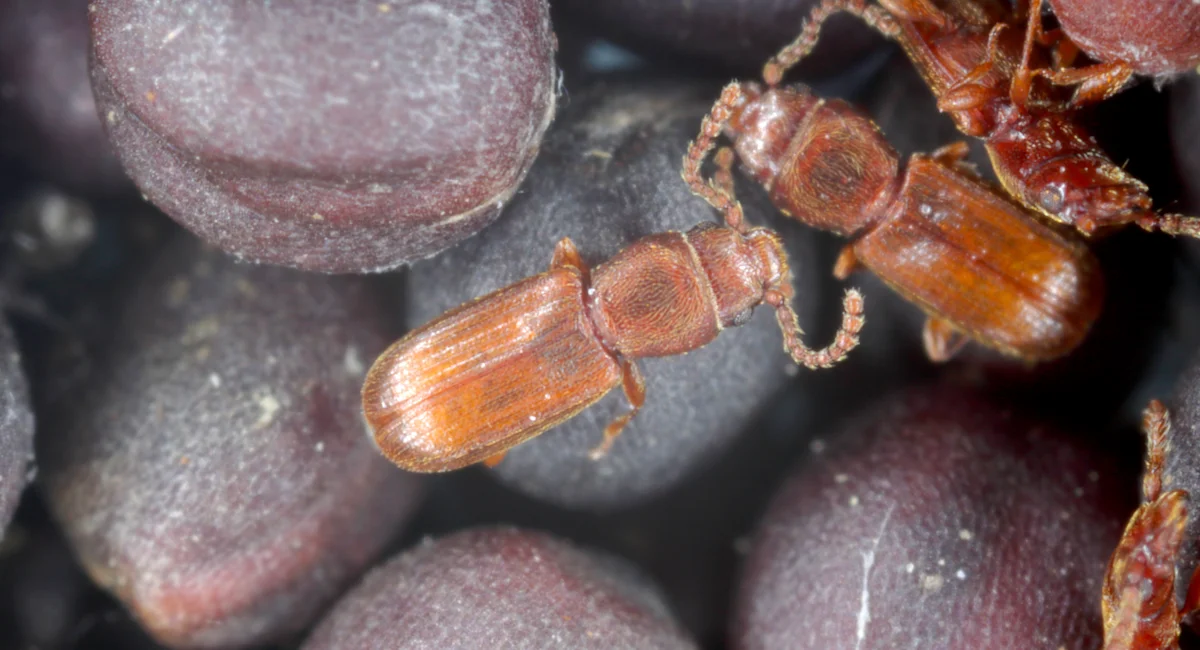
Ingredient sourcing and co-packing: Dry goods (flour, grains, spices, cereals) are particularly vulnerable to contamination by stored-product pests. Indian meal moths, sawtoothed grain beetles, and flour beetles can infest products at the co-packing stage and remain undetected through distribution. By the time activity becomes visible at the restaurant, the infestation is established, and the source is difficult to trace. Operators managing stored product pest risk across multiple locations need supplier-level controls, not just in-house monitoring.
-
Warehousing and distribution: Centralized distribution centers and regional warehouses introduce additional exposure. Temperature fluctuations, condensation, and proximity to non-food goods create conditions that support pest activity. If your distributor doesn't maintain an integrated pest management program with documented trend data, you have limited visibility into what's happening between their dock and your business.
-
Last-mile delivery: The least controlled leg of the supply chain. Delivery vehicles may service multiple account types on a single route, and load-separation practices vary widely. A vehicle that carries produce to a grocery account in the morning and dry goods to your location in the afternoon can introduce pest activity that neither party anticipated.
Spring Volume, Shorter Windows, Higher Exposure
Seasonal timing compounds supply chain pest risk. As spring accelerates, QSR businesses typically see increased order volumes, more frequent deliveries, and tighter receiving windows. Staff have less time to thoroughly inspect incoming goods, and the pressure to move product into storage quickly means visual checks are abbreviated or skipped entirely.
At the same time, rising temperatures accelerate stored product pest development. Indian meal moths, for example, can complete a full generation cycle significantly faster in warmer warehouse conditions, increasing the likelihood that infestation will reach your building before it's detected. The combination of higher volume, faster turnaround, and greater biological pressure creates a period of elevated risk that many operators don't consider in their pest management planning.
Corrugated cardboard deserves specific attention during this period. It remains one of the most common and most overlooked pest introduction pathways in foodservice. It provides harborage for cockroach egg cases, beetle larvae, and other pests that are nearly impossible to detect during a standard visual inspection. Breaking down and removing cardboard from storage and prep areas immediately upon receipt is a basic yet frequently inconsistent practice across multi-unit operations.

What to Ask Your Distributors and Co-Packers
Strengthening supply chain pest management doesn't require replacing suppliers or overhauling procurement. It starts with asking better questions and setting clearer expectations. You should evaluate your supply chain partners against specific pest management criteria.
Documentation and program structure:
- Does the supplier maintain a written integrated pest management program?
- Is it managed by a licensed commercial pest control provider?
- Can they produce trend reports, service logs, and corrective action records on request?
Audit history and certification:
- Does the facility hold a current third-party food safety certification (SQF, BRC, FSSC 22000)?
- What were the most recent audit findings related to pest management?
- Have there been any critical or major non-conformances in the past 12 months?
Vehicle and transit standards:
- What protocols govern vehicle cleanliness, temperature control, and load separation?
- Are delivery vehicles inspected between routes?
- Is there a documented procedure for reporting and responding to pest activity found during transit?
These aren't unreasonable requests. For suppliers already operating to food safety standards aligned with third-party audit schemes, this information should be readily available. Resistance or inability to provide it is itself a risk signal.
Building Accountability Into the Receiving Process
Even with strong supplier standards, your building threshold remains the last line of defense before the product enters your business. Formalizing receiving protocols - and making them consistent across locations - is one of the most effective ways to reduce supply chain pest risk in QSR environments.
Effective receiving practices include inspecting a representative sample of incoming cases for signs of pest activity, damage, or contamination before accepting the product. Staff should know what stored product pest evidence looks like: webbing, frass, larvae, or live insects in dry goods packaging. Rejected deliveries should be documented with photos and communicated back to the supplier and your pest management provider.
The goal is a shared standard that protects both parties. Consistently capturing data also feeds into your pest management trend analysis, giving your restaurant pest control program better intelligence on where risk is entering and how to respond.
Closing the Gap Between Site-Level and Supply Chain Pest Management
For most QSR operators, pest management is still treated as a site-level responsibility. The restaurant has a program, the provider services the location, and audit performance is managed accordingly. But as third-party audit standards continue to tighten expectations around incoming goods, supplier verification, and traceability, the gap between what happens inside the restaurant and what arrives from the supply chain is becoming harder to ignore.
Closing that gap doesn't require a wholesale change in operations. It requires a shift in perspective to recognize that pest risk is a supply chain issue, not just a facility issue, and that operators who proactively manage it will be better positioned for audit performance, food safety compliance, and long-term operational resilience.
If your current pest management program focuses primarily on what's happening inside your locations, it may be worth reviewing how supply chain risk factors into your broader food safety strategy. A conversation with your pest management partner about upstream exposure, receiving protocols, and supplier accountability is a practical place to start.
Don't let upstream gaps become your audit problem. RK Environmental's commercial pest control programs give you the monitoring, documentation, and expertise to protect your operations from dock to kitchen.
Book Your Free Pest Inspection Today
Our local technicians will assess your property and recommend tailored solutions. Fast, friendly, and completely obligation-free.
- Safe, targeted treatments
- Local experts, fast response
- Trusted, trained technicians