© 2026 Rentokil North America © RK Environmental Services – All Rights Reserved.
Food safety often comes down to doing the basics well, such as having clear employee practices, routine cleaning, proper maintenance, and a strong Integrated Pest Management (IPM) plan. Within IPM, bird activity is getting more attention than ever, especially under FSMA preventive controls (Food Safety Modernization Act), which stress the need for proactive measures.
One area that's getting more attention from auditors as a result is bird control, and for good reason. Birds might not seem like a major concern, but their droppings can carry bacteria like Listeria, E. coli, and Salmonella, creating real risks for food businesses. The FSMA highlights the need for effective bird and wildlife control to stop them from entering high-risk facilities.
To manage this, the first step is a thorough assessment of bird activity in and around the building. At RK Environmental Services, we work closely with facility teams during this process to ensure nothing gets overlooked.
Based on the findings, we develop a tailored bird control plan that may include exclusion techniques, visual deterrents, or sound-based tools. This hands-on, science-backed approach to bird control supports both day-to-day operations and long-term regulatory compliance.
Food Safety with Bird Management
Food and pharma businesses in New Jersey can be exposed to citations from the FDA and face large fines, if they do not comply with bird control regulations. FSMA rules state that once a bird is spotted inside a facility, it must be removed immediately to limit the risk of food contamination and disease. Exclusion and humane removal are both authorized solutions, but further actions are often required to stop future activity. Some species are also protected and cannot be forcibly removed.
Migratory Bird Treaty Act
The Migratory Bird Treaty Act (MBTA) protects most bird species. It is based on international agreements with Canada, Mexico, Japan, and Russia and makes harming birds, their nests, or eggs illegal without special permission. Worldwide, the treaty protects 10,000 bird species. The rules prevent the removal of 1,100 species in the US, although pigeons, house sparrows, and European starlings are not protected.
Because of these protections, companies may need expert advice in the management of birds. An IPM focused approach to bird control helps facilities meet MBTA rules and FSMA requirements. This helps to reduce safety risks, production delays, and the negative impact on the business. Violations can lead to criminal penalties, including fines, a consequence no facility wants.
Bird Management Assessment
Effective bird wildlife control begins with a detailed site assessment to understand what’s attracting birds to the facility. The results help to establish a targeted control plan. Facility managers and environmental health and safety (EHS) teams play a key role throughout the process, offering essential insight into site operations. As part of our service, we also provide guidance on sanitation practices to help reduce bird activity and protect the facility. This starts with understanding what’s drawing birds in and how to reduce that pressure.
Conducive Conditions
Certain conditions can make your facility more appealing to birds. This includes open dumpsters, standing water, product spillage, and structural gaps. Birds looking for food, shelter, or nesting space are drawn to these features. Regular monitoring and good sanitation can reduce flashpoints and act as the first line of defense.
Identifying and correcting these issues early helps lower the risk of birds entering or nesting on site. These actions support compliance with FSMA preventive controls by reducing hazards linked to pest contamination.
Modify Bird Habitats
Another important step in the management of birds is modifying the environment. This may involve trimming trees, removing overhangs where birds perch, or sealing structural gaps. In some cases, removing nests (when legally permitted) is necessary to prevent future activity.
Regular outdoor maintenance helps make your facility less attractive to birds. Trimming vegetation and creating clear space between plants and buildings can reduce safe nesting and roosting spots. Habitat modification is especially important when bird pressure is high and exclusion methods alone are not enough.
Formulating a Strategy
Once conducive conditions and habitats have been evaluated, a tailored strategy can be developed based on the level of bird activity.
Approaches may vary depending on whether bird pressure is low, moderate, or high. The plan may include a mix of exclusion tools, deterrents, and habitat changes.
Taking a strategic, site-specific approach helps reduce current bird activity and prevent future issues. It also plays an important role in supporting regulatory compliance and long-term facility protection, making it a critical part of an integrated pest management program.
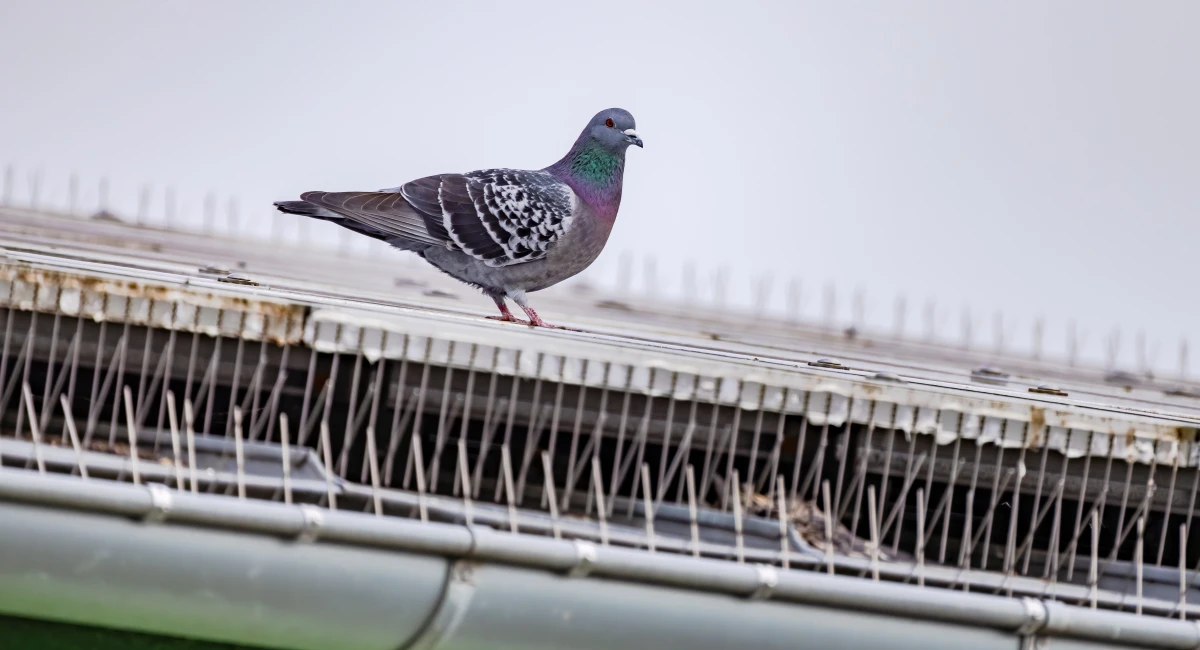
Bird Exclusion & Management Technology
After completing the assessment, RK Environmental Services will implement tailored solutions to control bird populations. These tools are designed to be humane, legal, and fit the needs of food and pharma facilities.
We use several tools to control birds, including population control, exclusion, visual deterrents, and sound or taste deterrents. Each category plays a role in reducing bird presence and preventing contamination.
Population Reduction or Harvesting
Sometimes, we take steps to reduce bird populations. This method is only for birds not protected by the MBTA. We always follow strict rules and usually need special permits.
Population control is typically a last resort, when exclusion and deterrents are insufficient. This strategy is just one element of a larger plan to control and manage birds.
Exclusion
Exclusion is one of the most reliable methods for keeping birds out of highly sensitive areas. This involves installing physical barriers like bird netting, spikes, wire systems, or electric shock tracks. These tools prevent birds from roosting or entering buildings without harming them.
Exclusion aligns well with FSMA preventive controls because it removes the risk before contamination can occur. It is especially effective in docks, loading bays, rooftops, and common bird entry points.
Visual Deterrents
Visual deterrents are designed to make birds feel unsafe or uncomfortable near a facility. These include scare-eye balloons, reflective tape, strobe lights, and predator decoys. While useful, their effectiveness is maximized when implemented alongside other deterrents or as part of a rotating control strategy.
Sound and Taste Deterrents
Sound deterrents broadcast distress calls or predator noises to keep birds away. Taste deterrents apply harmless but unpleasant-tasting substances to surfaces where birds perch. These methods can reduce bird activity in busy locations, like rooftops or ledges.
With the right tools and strategies in place, food and pharmaceutical facilities can reduce pest pressure and better protect their operations.
RK Environmental supports this process by providing a high-quality and reliable pest management service. We customize solutions to the needs of our customers in the food, pharmaceutical, and related industries. Schedule a consultation today and take the next steps to safeguard your business.
Frequently Asked Questions
Birds can carry pathogens and contaminate food, packaging, and equipment. Controlling birds helps meet FSMA preventive controls by reducing environmental hazards.
It depends on the species. Most birds are protected under the Migratory Bird Treaty Act, so removal usually requires federal approval.
They can be, especially as part of a broader control strategy. Sound deterrents are more effective when used with exclusion and habitat changes.
Book Your Free Pest Inspection Today
Our local technicians will assess your property and recommend tailored solutions. Fast, friendly, and completely obligation-free.
- Safe, targeted treatments
- Local experts, fast response
- Trusted, trained technicians